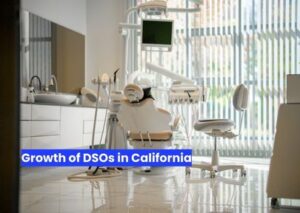
Over the last ten years, the rapid rise of DSOs in California transformed the state into one of the fastest-growing and most competitive dental markets in North America.
With a large population, enormous demand, and a highly developed healthcare system, California has become an attractive expansion opportunity for Dental Service Organizations seeking economies of scale, increased system efficiency, and long-term success.
The result is that DSOs are acquiring practices, forming partnerships, and creating multi-location networks throughout the major metropolitan areas of California. The consolidation movement will have a significant effect on the hiring trends, compensation models and future employment of dentists in California in 2026 and beyond.
Understanding the DSO Expansion Model
DSOs support dental offices with centralized operations to enable dentists to only provide care for their patients. California has many independent dentists and therefore is a great market for consolidation into DSOs.
Many of California’s independent dentists, as they near retirement, are choosing to partner with DSOs through acquisitions, allowing those DSOs to enhance their visibility in the market without sacrificing continuity of care at the clinical level.
This method creates more scalable operations while creating competition between DSOs and private dental offices for the hiring of employees throughout the state.
What is the Current Market Share of DSOs in California?
California has one of the highest levels of DSO penetration in the United States, and with corporate groups controlling a large portion of urban dental clinics, Los Angeles, San Diego, San Jose and the Bay Area have been particularly impacted by this trend.
DSOs exist in all counties, and while there are differences among counties in the percentage of multi-chair and high-revenue practices managed by DSOs, current estimates show that DSO’s market penetration is rapidly increasing. DSOs dominate cosmetic dentistry corridors and many of the insurance driven treatment markets.
The increase in DSO’s share of the market, relative to the overall share of dentist practice ownership reflects a shift from fragmented to Corporate models of care delivery.
What are the key Drivers Behind DSO Growth?
Several factors have led to a surge of consolidation in California’s dental practices.
Here are the primary reasons for expanding
1. Increasing operational costs: Solo ownership is no longer financially feasible, with the rising cost of real estate leases, staff salaries and regulatory compliance. Dental Support Organizations reduce these costs through centralized cost management.
2. Staffing shortages: Many clinics are having trouble recruiting hygienists and specialists. As a result, they are looking to organizations that already have established working relationships with recruiting agencies as well as workforce planning teams.
3. Required investment in Technology: Digital imaging systems, CAD CAM systems, and AI-based diagnostic tools have resulted in high costs for start-up clinics to acquire. Various Dental Support Organizations will make infrastructure improvements that would normally be financially impossible.
4. Insurance and billing differ: Multiple corporate billing departments help streamline the processing of insurance claims for affiliated clinics, thus reducing the workload of administrative staff at each practice.
Hiring & Workforce Implications
Within the state of California, the rise of DSOs has greatly impacted the way dentists recruit and work. In the United States and Canada, DSOs typically offer higher wages and benefits than independent dental practices, including structured salaries, relocation allowances, signing bonuses, and sponsorship for continuing education.
As such, DSOs have become attractive destinations for dentists who have recently graduated from school and for those who were trained overseas but are now pursuing licensure in California.
Impact on Solo Practices
The expansion of DSO will not end the existence of the solo practitioner; however, DSO is changing how the solo practitioner will compete.
To compete with the DSO market, the solo practitioner has shifted to specializing in niche markets, building strong ties to their community, and providing individualized experiences to their patients. They also have the option of creating a strategic alliance or group purchasing networks and possibly forming partial equity partnerships to be competitive financially.
Independent dental practices located in suburban and family dentistry market areas still have a significant patient retention advantage over DSOs, even as DSOs grow.
Patient Experience & Branding Influence
The rise of corporate dental groups has led to standardization of branding, digital appointment systems, and service consistency across multiple locations. There are benefits to the patient experience, including acceptance of various insurance plans, longer hours for appointments, and an ease of referral to specialists within a DSO network.
Despite these advantages, certain patient demographics still prefer the independent clinical practice model as they value a personalized level of care and long-term relationship with their dentist.
The existence of both large-scale corporate conglomerates and small independent providers will support diversity within California’s overall dental care system.
Future Outlook: 2026 and Beyond
DSOs have been steadily growing in California, with their continued growth forecasted through 2026 due to the ongoing strength of private equity investment being made into healthcare. Continued consolidation will likely take place in mid-sized suburban areas that have low acquisition saturation.
Hybrid partnership models are expected to increase, thereby allowing dentists to keep some ownership while benefitting from corporate style assistance infrastructure or supports. Workforce competition (especially for hygienists and specialists) will continue to become competitive, causing an even greater emphasis on a recruitment’s ability to be scalable.
Related article: The Rise of Dental Service Organization in New York
Final Thought
California’s Dentistry is transitioning towards a Mixed Systems Model of a combined Corporate System and an Independent Practice System. The DSOs are gaining measurable market share; however, the traditional solo clinics still possess a cultural, relational and entrepreneurial advantage.
The long real-term coexistence of DSOs and Independent Practices is imminent; however, hiring capabilities, investing in infrastructure and managing staff expectations will ultimately establish competitive advantage for each business model.
Frequently Asked Questions
1. Why are DSOs expanding rapidly in California?
High patient demand, rising operational costs, and acquisition opportunities are driving corporate expansion.
2. Do DSOs dominate California’s dental market?
They hold significant urban market share, though independent clinics remain strong in suburban and rural regions.
3. How does DSO growth affect dental hiring?
Corporate groups create structured employment pathways, increasing competition for talent.
4. Are solo practices declining in California?
They are evolving rather than declining, often focusing on niche care and personalized service models.
5. Will DSO consolidation continue beyond 2026?
Private equity investment and workforce scalability needs indicate continued expansion.
6. What does this mean for dentists seeking jobs?
More employment options will exist, ranging from corporate roles to independent ownership tracks.
Also read: Who Is Leading California in Dental Industry ? Top Dental Service Organizations to Watch in 2026