Managing a single dental clinic is already a detailed task, but when a dental group operates across multiple cities or regions, the level of responsibility increases significantly. One of the most critical areas that often becomes difficult to control is equipment management.
Dental equipment is the backbone of any clinic. From basic tools to advanced machines, everything needs to be available, working properly, and maintained on time. When you expand across locations, keeping track of all this becomes more complex. Small gaps in management can lead to breakdowns, delays in treatment, and even loss of patient trust.
This is why managing dental equipment across locations requires a proper system, clear coordination, and a well-planned approach. It is not just about tracking machines, it is about ensuring that every clinic runs smoothly, no matter where it is located.
Why Equipment Management Becomes Challenging Across Locations
When a dental group operates in different cities, each clinic may function slightly differently. Patient flow, staff experience, and usage of equipment can vary from one location to another.
Because of this, equipment management becomes harder to control. Some clinics may overuse machines, while others may not use them efficiently. Maintenance schedules can get delayed, and communication gaps can lead to confusion.
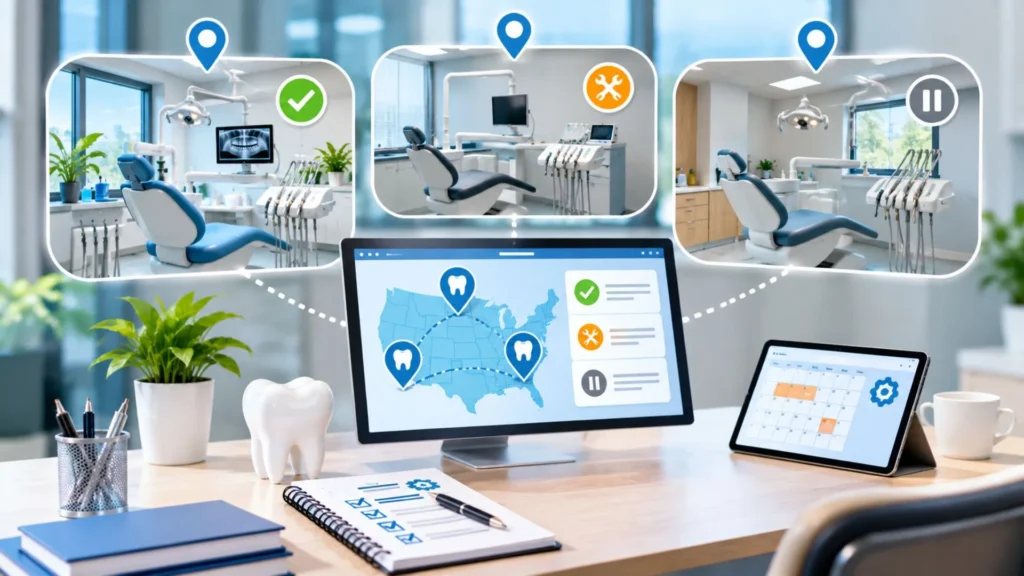
Another challenge is visibility. Without a proper system, it becomes difficult to know the condition of equipment at each location. Managers may not even realize there is an issue until it becomes serious.
These challenges make it clear that a structured approach is necessary, especially in multi-location dental practice management.
Key Ways to Manage Dental Equipment Across Multiple Locations
Managing equipment across cities requires consistency, planning, and clear communication. Below are some important ways to handle this effectively. Each point focuses on improving control without making the process complicated.
- Maintain a Central Equipment Record: One of the most important steps is to have a central record where all equipment details are stored. This includes purchase dates, maintenance history, usage, and current condition.
Having this information in one place makes it easier to track everything. It also helps in making quick decisions when something needs repair or replacement. Without a central system, it becomes difficult to manage equipment across locations.
- Keep Equipment Standard Across Clinics: Using different types of machines in every clinic can create confusion. It makes training harder and increases maintenance complexity.
When equipment is standardized across locations, everything becomes simpler. Staff can easily work in different clinics, and servicing becomes more consistent. It also reduces the need for different spare parts and technical support.
- Follow a Fixed Maintenance Schedule: Waiting for equipment to break down is not a good approach. Regular maintenance should be planned and followed strictly across all locations.
When every clinic follows the same maintenance schedule, it reduces unexpected issues. It also improves the life of equipment and ensures smooth daily operations.
Consistency in maintenance is a key part of a strong dental equipment management system.
- Assign Responsibility at Each Location: Even with a central system, each clinic should have someone responsible for managing equipment on a daily basis.
This person ensures that:
- Equipment is handled properly
- Issues are reported quickly
- Maintenance schedules are followed
Having a responsible person at each location improves accountability and prevents delays in solving problems.
- Use Data to Understand Equipment Usage: Tracking how equipment is used can give useful insights. Some machines may be used more frequently, while others may not be used enough.
By understanding this, dental groups can:
- Plan better equipment distribution
- Reduce unnecessary purchases
- Improve efficiency
Data helps in making smarter decisions instead of relying on guesswork.
- Improve Communication Between Locations: Communication is one of the most important parts of managing multiple clinics. If one location faces an issue, others should be aware of it.
Regular updates between clinics help in:
- Sharing important information
- Solving problems faster
- Maintaining consistency
When communication is strong, managing equipment becomes much easier.
The Role of Technology in Equipment Management
Technology has made it easier to manage equipment across different locations. Digital systems can track everything in real time and reduce manual work.
A good dental equipment management system can:
- Store all equipment data in one place
- Send maintenance reminders
- Track usage and performance
- Provide easy access to reports
This reduces errors and saves time. Managers can check equipment status without visiting each location.
Technology also improves coordination between clinics and helps in maintaining consistency.
How Consistency Improves Multi-Location Management
Consistency is one of the biggest factors in successful equipment management. When all clinics follow the same process, it becomes easier to control operations.
This includes:
- Using similar equipment.
- Following the same maintenance schedule.
- Maintaining proper records.
- Reporting issues in a standard format.
Consistency reduces confusion and ensures that every clinic delivers the same quality of service. In multi-location dental practice management, consistency helps in building a strong and reliable system.
Common Mistakes to Avoid
Even with good planning, some mistakes can create problems in equipment management.
- One common issue is not updating records regularly. When data is outdated, decisions may be incorrect.
- Another mistake is ignoring small issues. Minor problems can turn into major breakdowns if not fixed on time.
- Lack of communication between clinics can also create confusion. When updates are not shared, problems may take longer to solve.
Avoiding these mistakes helps in maintaining smooth operations.
Building a Strong System for Long-Term Success
Managing equipment across different cities is not a one-time task. It requires a system that can work consistently over time.
A strong system includes:
- Central tracking of equipment.
- Clear responsibilities at each clinic.
- Regular maintenance schedules.
- Use of technology.
- Strong communication between locations.
When all these elements are combined, it creates a stable and efficient process. This not only improves operations but also reduces stress for management and staff.
Final Thought
Managing dental equipment across multiple cities or regions may seem difficult, but with the right approach, it becomes manageable and efficient.
The key is to stay organized, maintain consistency, and use simple systems that work across all locations. By focusing on central tracking, regular maintenance, and clear communication, dental groups can avoid common problems and improve performance.
FAQs
1. Why is managing dental equipment across locations important?
It helps maintain consistency, reduce breakdowns, and ensure smooth operations in all clinics.
2. What is the best way to track dental equipment?
Using a centralized digital system makes it easier to manage equipment details and maintenance.
3. How can dental clinics avoid equipment breakdowns?
By following regular maintenance schedules and addressing issues early.
4. Does technology help in managing multiple clinics?
Yes, it helps in tracking, monitoring, and coordinating equipment across all locations.
5. What is the biggest challenge in multi-location equipment management?
Maintaining consistency and proper communication between different clinics.