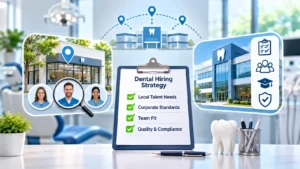
Managing multiple dental clinics is not just about handling operations—it is about managing people. Each clinic has its own team, its own challenges, and its own working style. When these clinics are spread across different cities or regions, keeping every team strong and aligned becomes a real challenge.
This is where dental regional managers play a critical role. Their responsibility goes beyond supervision. They are responsible for building teams that are stable, motivated, and capable of delivering consistent patient care across all locations.
Strong local teams are the backbone of a successful dental group. When teams are well-managed, everything improves patient experience, workflow, staff retention, and overall performance. This is why dental regional managers team building is one of the most important areas to focus on.

What Defines a Strong Dental Team in Multi-Location Practices
A strong dental team is not just about skills. It is about how well people work together, how clearly they understand their roles, and how smoothly they handle daily tasks.
In multi-location practices, strength comes from consistency. Every team should follow similar standards, communicate effectively, and stay aligned with the overall goals of the organization.
When teams are strong:
- Work becomes faster and more organized.
- Patients feel more comfortable.
- Staff feel confident and supported.
This is the foundation of building strong dental teams across locations.
How Dental Regional Managers Can Build Strong Local Teams
Building strong teams requires consistent effort and the right approach. Below are key actions that regional managers should focus on.
1. Set Clear Roles and Expectations for Every Team Member
When roles are unclear, confusion becomes part of daily work. Regional managers must ensure that every team member understands their responsibilities.
This includes defining clinical duties, administrative tasks, and daily expectations clearly. When employees know exactly what they need to do, they work with more confidence and fewer mistakes.
2. Maintain Regular and Structured Communication
Communication is one of the most important parts of managing multiple teams. Without it, even strong teams can become disconnected.
Regional managers should stay in regular contact with every clinic. This can be done through weekly check-ins, team meetings, or simple updates.
Consistent communication helps in solving problems quickly and keeps all teams aligned. It also ensures that no location feels isolated from the rest of the organization.
3. Develop Strong Local Leaders at Each Clinic
A regional manager cannot manage every detail at every location. This is why strong local leadership is important.
Each clinic should have a reliable leader who can manage the team daily. Regional managers should guide and train these leaders so they can handle responsibilities confidently.
When local leaders are strong, teams become more stable. It also reduces the pressure on regional managers and improves overall efficiency.
4. Encourage Team Collaboration Instead of Individual Work
A strong team is built on collaboration, not competition. Employees should feel comfortable supporting each other.
Regional managers should promote teamwork by encouraging open discussions and shared responsibilities. When team members work together, tasks become easier and faster.
5. Provide Continuous Training and Skill Development
Employees perform better when they feel they are growing. Training is not just about improving skills—it is about keeping employees motivated.
Regional managers should ensure that training opportunities are available across all locations. This can include clinical training, communication skills, or system updates.
When employees learn and grow, they become more confident in their roles. This directly supports dental team management strategies.
6. Recognize and Appreciate Team Efforts Regularly
Recognition is a simple but powerful way to improve team strength. Employees want to feel valued for their work.
Regional managers should regularly appreciate both small and big achievements. This can be done through simple feedback, rewards, or acknowledgment.
When employees feel recognized, their motivation increases. They become more engaged and committed to their work.
You may also check: Dental Staff Training Tips
Why Consistency Across Locations Matters for Team Strength
Managing multiple clinics requires consistency. Without it, each location may follow a different approach, which can create confusion.
Consistency does not mean strict control—it means having clear systems that everyone follows.
1. Standard Processes Improve Team Efficiency
When every clinic follows the same process, work becomes more organized. Staff can easily understand tasks and perform them without confusion. Standard processes also reduce training time. New employees can quickly adapt because the system is the same across all locations.
2. Uniform Communication Builds Better Coordination
Using the same communication style across clinics helps in maintaining clarity. It ensures that everyone receives the same information. This improves coordination between teams and helps in solving issues faster.
How Leadership Style Impacts Local Team Performance
Leadership plays a major role in shaping how teams behave. The way a regional manager communicates and handles situations directly affects the team.
1. Being Approachable Builds Trust
Employees should feel comfortable sharing their concerns. When leaders are approachable, teams become more open and honest. This helps in identifying issues early and improving team relationships.
2. Staying Calm During Challenges Maintains Stability
Dental clinics can be busy and stressful. Leaders who stay calm during difficult situations help keep the team stable. This creates a positive environment where employees feel supported, even during pressure.
What Role Feedback Plays in Strengthening Teams
Feedback is one of the most effective tools for improving team performance. It helps identify gaps and provides direction for improvement.
1. Regular Feedback Improves Daily Performance
When employees receive regular feedback, they understand what they are doing well and what needs improvement. This helps in improving performance consistently without waiting for major issues.
2. Listening to Staff Builds Engagement
Feedback should not be one-sided. Regional managers should also listen to their teams. When employees feel heard, they become more engaged and committed. This strengthens the overall team.
Final Outcome
Building strong local teams across multiple dental clinics requires more than just management; it requires leadership, consistency, and continuous support.
By focusing on clear roles, strong communication, local leadership, and employee development, regional managers can create teams that are efficient and motivated.
In the end, successful dental regional managers team building leads to better patient care, smoother operations, and long-term growth for the entire organization.
FAQs
1. What is the main role of a dental regional manager in team building?
They ensure that all clinic teams are aligned, supported, and working efficiently.
2. How can regional managers improve team performance?
By improving communication, providing training, and supporting local leaders.
3. Why is consistency important across dental teams?
It helps maintain quality and ensures smooth operations across all locations.
4. How does leadership affect team strength?
Good leadership builds trust, improves communication, and motivates employees.
5. What is the biggest challenge in managing multiple teams?
Maintaining communication and alignment across different locations.